Black Lilith Rising
October 13, 2025-November 24, 2025
Albion Jeune
London, UK
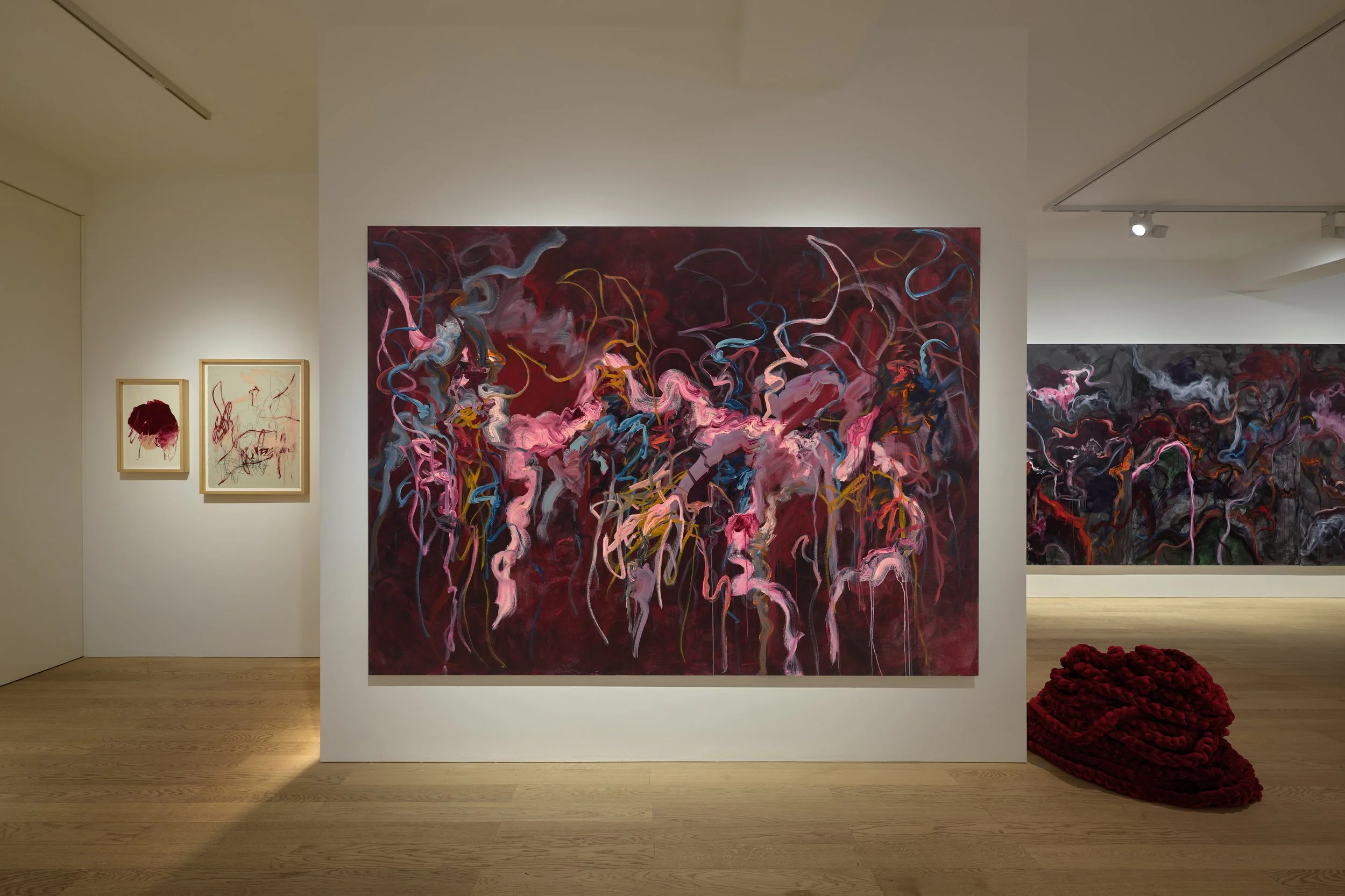
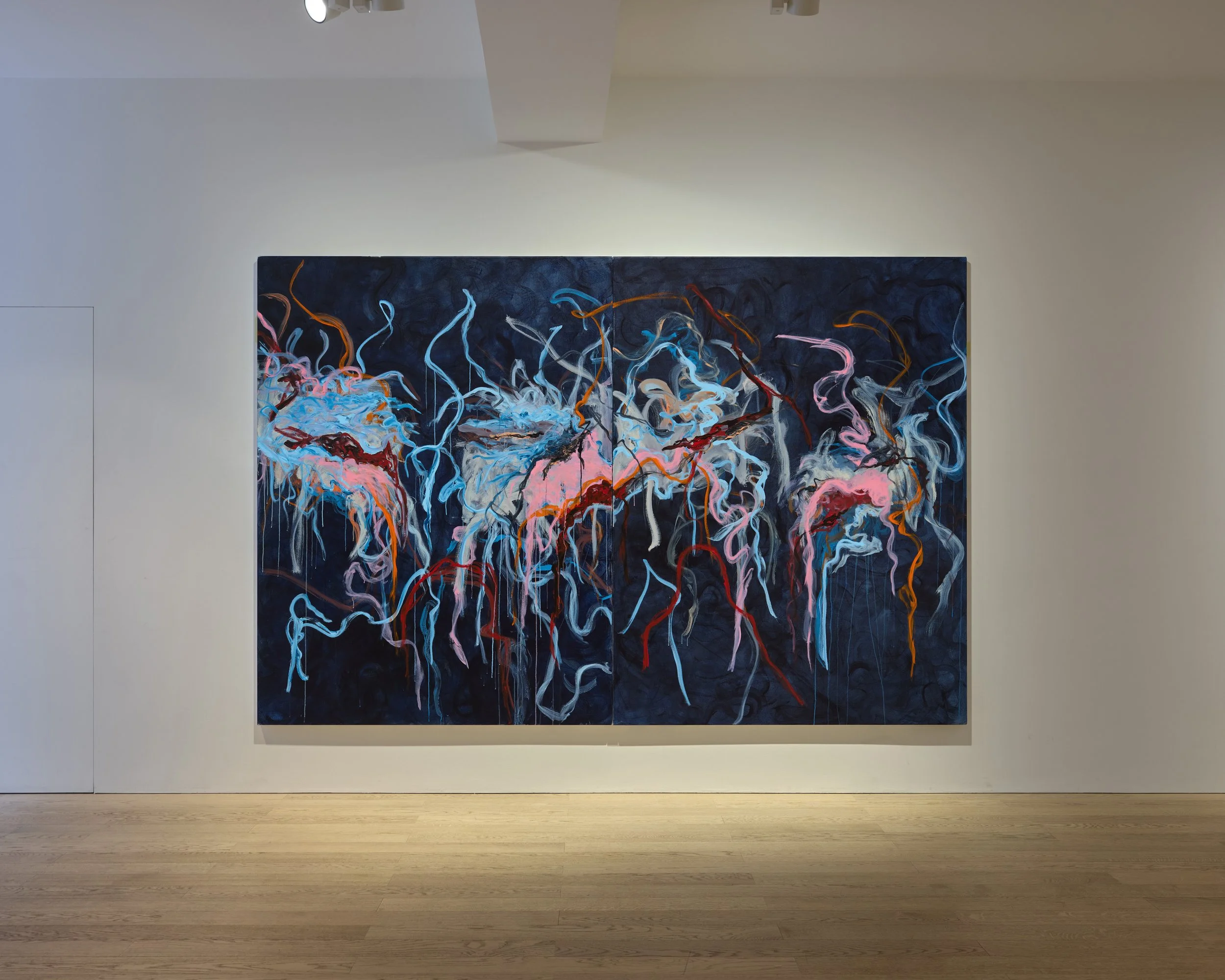
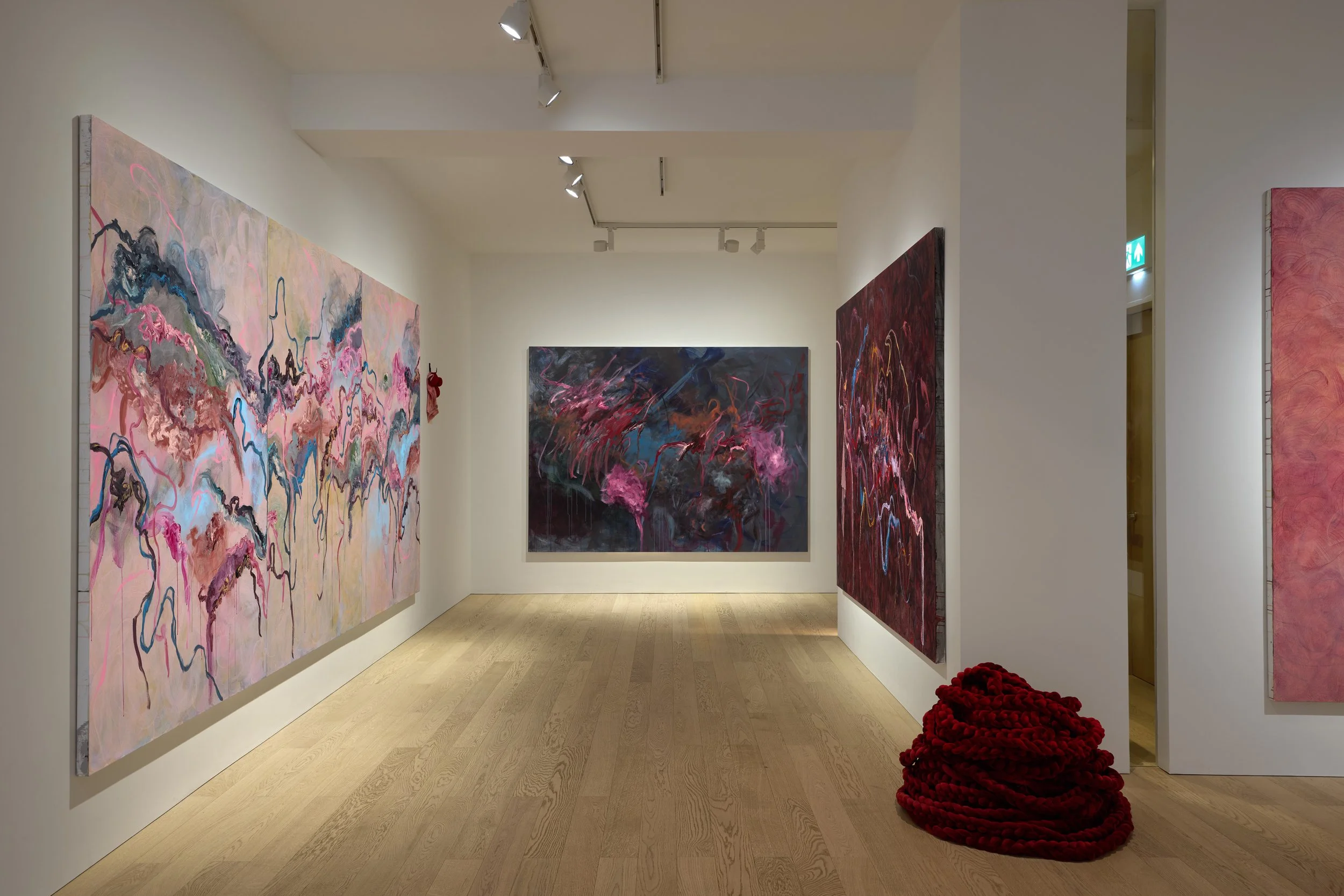
installation view: Albion Jeune
Black Lilith Rising explores historical, mythological, and liberatory Black feminist and divine feminine figures—both iconic and personal, including women within my own family—to examine how women and femmes have harnessed power and a full emotional range across time. Through this lens, I share my own journey of self-actualization, mapping the psychological and somatic terrain of womanhood. My work reveals how sacred rage and beauty are not opposites, but intertwined forces—capable of transforming one another and giving rise to something powerful and new.
film credit: Alex Munro, Oresti Tsonopolous
Black Lilith Rising marks both a continuation and a turning. This body of work builds upon the themes of deconditioning, emotional excavation, and shame-free self-recognition that have shaped my recent exhibitions, while opening into a more dimensional, materially expansive language. It is a beginning and an evolution—an inquiry into sacred rage, matrilineal inheritance, and the ongoing process of becoming whole in midlife.
At the heart of this exhibition are figures—historical, mythological, divine, literary, and deeply personal—who embody the full emotional and spiritual range of women and femmes across time. Inanna. Lilith. Ezili Dantor. Iyami Aje. Kali. Oya. The unnamed women in my own lineage. Black feminist writers and thinkers whose words have served as maps and mirrors. These figures are not simply references; they are interlocutors. Through them, I explore how power is claimed, policed, distorted, surrendered, and reclaimed.
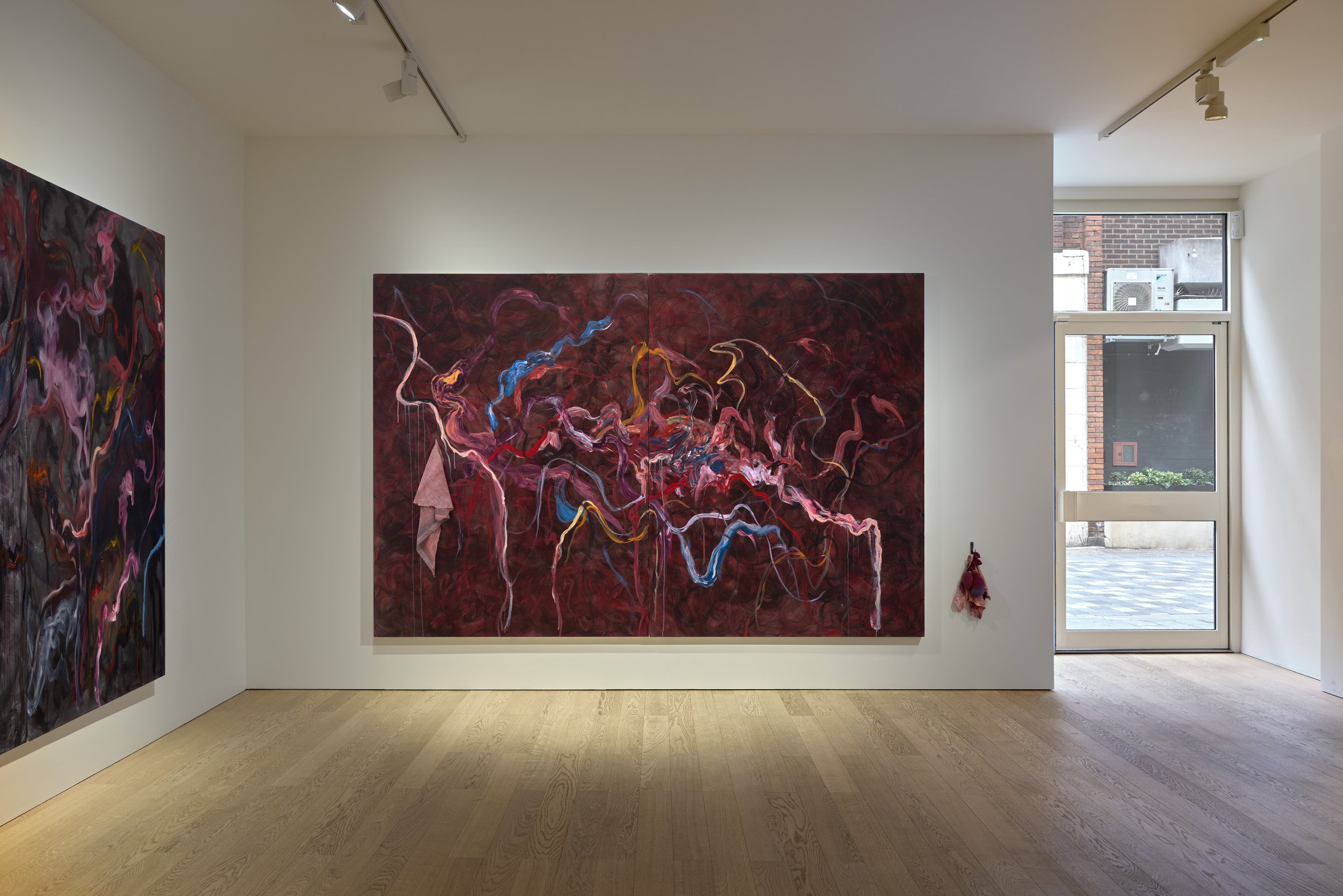
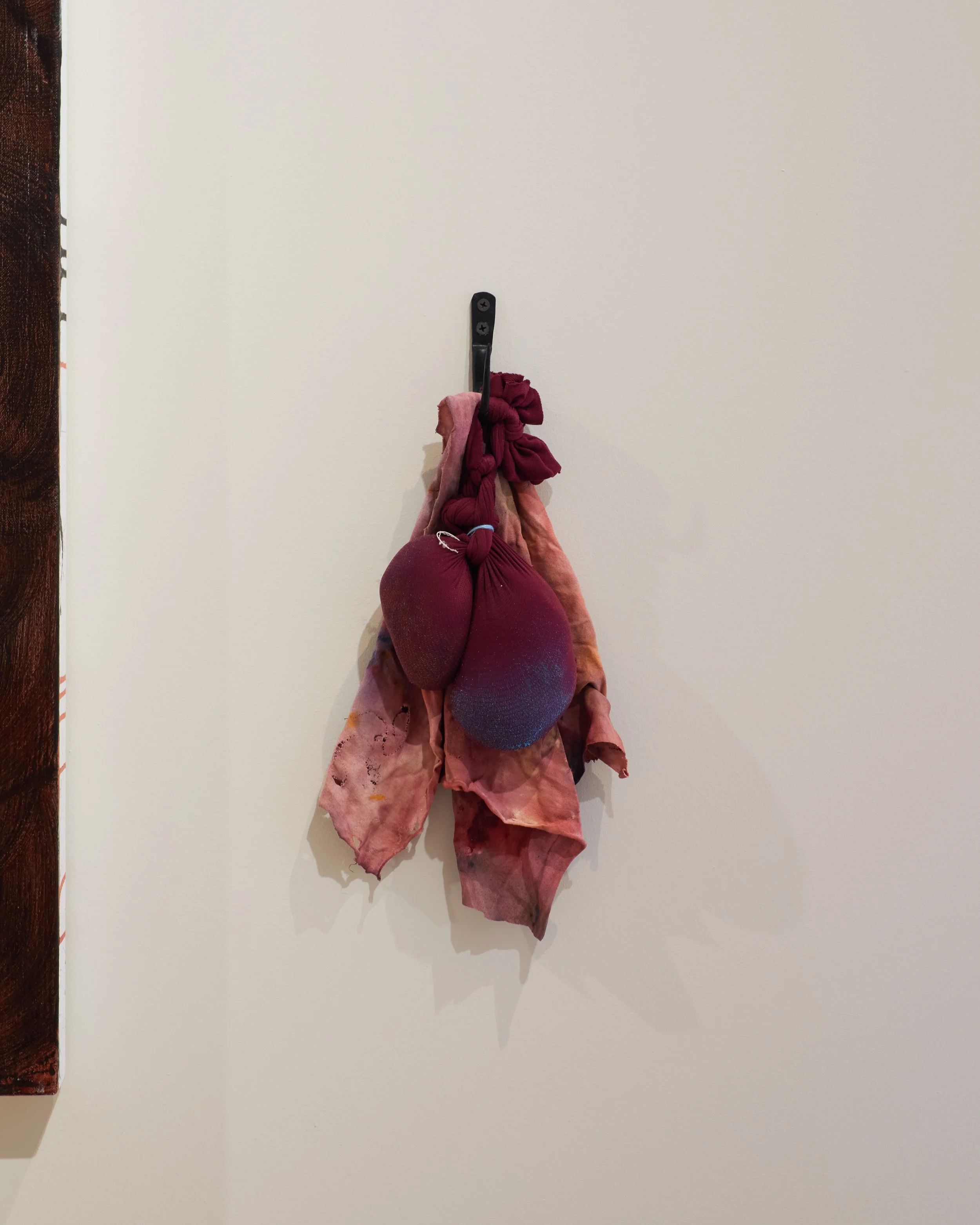
The exhibition is anchored in two literary poles: Inanna’s Descent and Sonia Sanchez’s declaration, “I have become a collector of me… I have put meat on my soul.” Inanna’s passage through the seven gates of the underworld—where she is stripped of status, adornment, and identity before being killed and hung on a hook—mirrors the refining violence of transformation. Self-actualization often requires surrender. It demands the death of internalized misogyny, patriarchal conditioning, and the emotional labor we are taught to perform for others. Something must be hung up. Something must be allowed to die.
And yet, alongside surrender is reclamation. Sonia Sanchez’s words hold the opposite but equally necessary movement: gathering, rebuilding, loving oneself fiercely after betrayal and loss. If Inanna’s journey is one of stripping and death, Sonia’s is one of retrieval and nourishment. Black Lilith Rising lives in the space between those two gestures—between shedding and collecting.
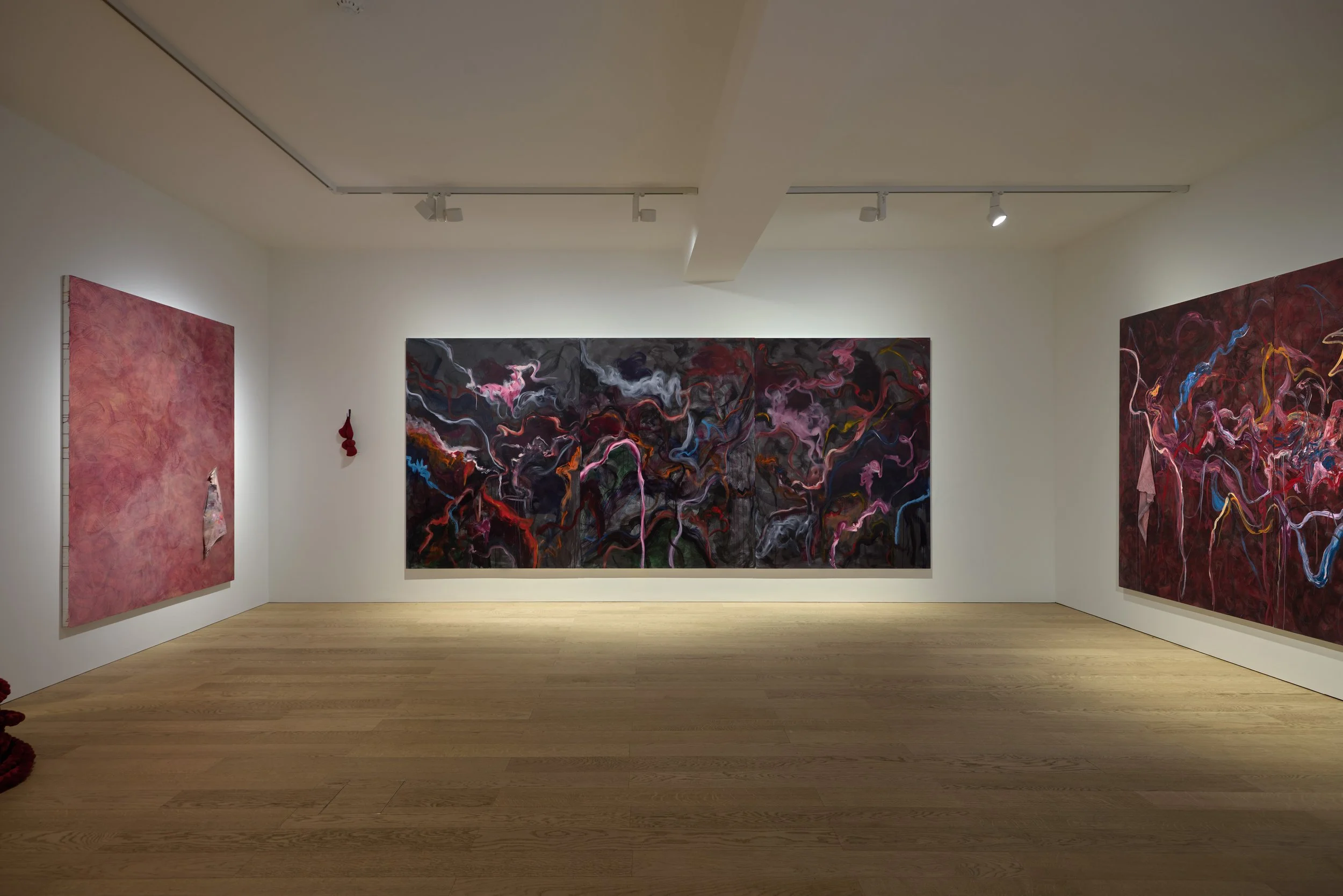
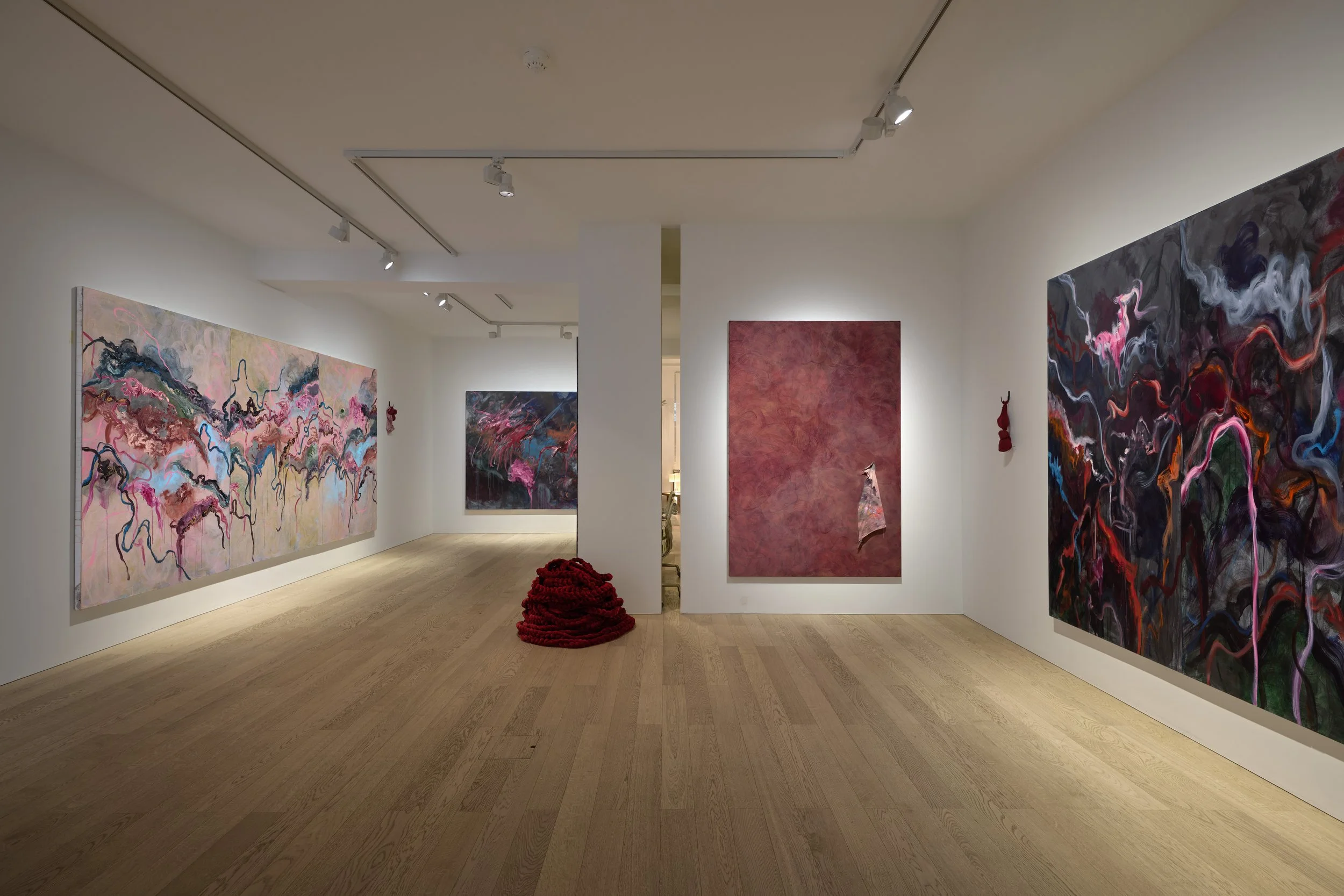
Materially, this shift is visible. For years, I relied on solid, monochromatic grounds. In this body of work, the paintings emerge from layered washes of heavy body and fluid acrylics applied with soft Hake brushes, building moody, underworld atmospheres. The reds move between womb and viscera—cosmic interior and belly of the underworld. The blues and blacks hold depth, suspension, and grief. These layered grounds reject flatness; they insist on dimensionality, complexity, and immersion.
The crocheted red yarn sculptures extend this language into space. Their rope-like forms evoke umbilical cords, bloodlines, fibroids, scar tissue, and the invisible biochemical inheritances we carry—methylation, epigenetic memory, ancestral imprint. They reference the womb as a site of creation and illness, connection and rupture. They are tethers between generations, strands of matrilineal continuity. A three-strand cord is not easily broken.
Throughout the exhibition, softness and hardness remain in tension. I am interested in the contradiction of softness as strength. It is a fight to remain soft in a world that demands our rigidity. Sometimes we must wage war simply to preserve our tenderness. Rage, in this context, is not destructive for destruction’s sake—it is sacred, protective, and transmutational. It is the refusal to be diminished. Historically, the rage of women, femmes, and especially Black women has been demonized and policed. Here, it is honored as generative force.
This work is informed by my lived experience: perimenopause, chronic illness, neurodivergence, recovery from abuse, and the unmasking of identity in midlife. These are not metaphors; they are embodied realities. The journey from masked to unmasked, from maiden to mother to crone, parallels Inanna’s descent and Venus’ retrograde passage through the underworld. Each stage requires loss. Each gate demands release. But on the other side is a Morning Star—a return to self, altered and more luminous.
Witnessing is central to this exhibition. In the Sumerian tale, two genderless beings enter the underworld and simply echo Ereshkigal’s grief. Because they bear witness, transformation becomes possible. I think of my work as an echo, a call, and a response. I pour myself into it, and I hope it reflects back what others carry but may not yet have language for. It is for women, femmes, and gender-fluid and non-binary people who recognize themselves in these cycles of stripping and gathering.
Black Lilith Rising is not a conclusion. It is a starting point—a widening of inquiry into divine feminine archetypes, matriarchy, sacred rage, and embodied liberation. It is still evolving in medium and mood: painting, soft sculpture, movement, text. It asks what must die, what must be reclaimed, and how we might rise—not purified, but fuller.